June 3, 2026
Recognising when it is time to exit: Arosha Brouwer on finding the right window
When should a founder consider an exit? For many entrepreneurs, it is a question that feels almost uncomfortable to ask.
A startup begins with a big ambition. The focus is on building, raising capital, finding product–market fit and creating something that can grow. An exit may be discussed as a distant milestone, but the reality is often more complex.
Sometimes the right moment arrives before the company has followed the path its founders first imagined.
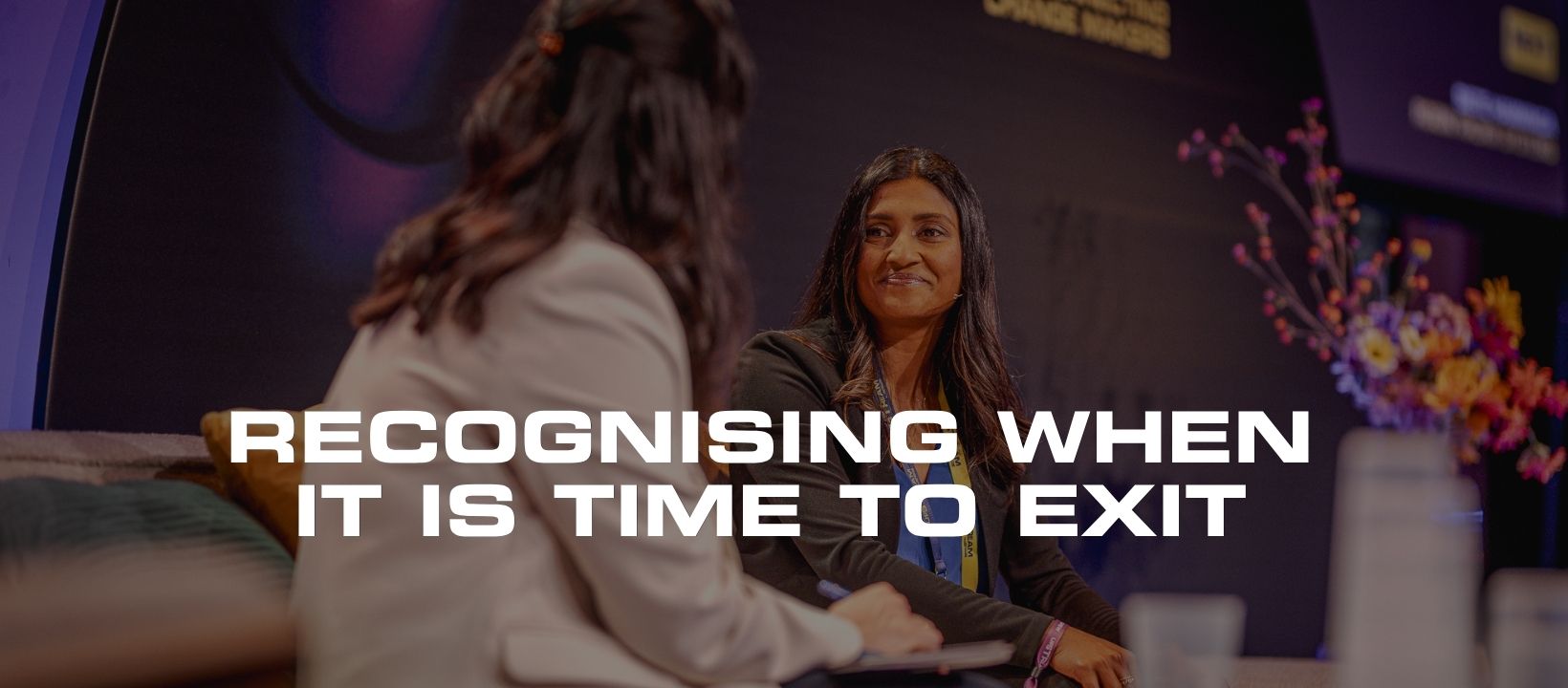
During her Upstream Festival session, The Window: Recognising When It’s Time to Exit, Arosha Brouwer shared the story behind the acquisition of employee wellbeing platform Quan by HR-tech company TrueTribe.
Her reflections offered a practical perspective on one of the most difficult decisions founders face: recognising when a partnership or acquisition is not a compromise, but the strongest way to move the mission forward.
Start with the problem you want to solve
Brouwer co-founded Quan with Lucy Howie to make employee wellbeing a strategic priority within organisations.
The platform helped companies measure and manage wellbeing at both individual and team level, using a scientifically grounded approach to identify issues such as stress, burnout and absenteeism before they escalated.
Quan began with an ambitious vision.
The company wanted to help organisations treat wellbeing as something more meaningful than a collection of isolated benefits or temporary initiatives. It should become a measurable part of the way teams work, leaders make decisions and companies perform.
That problem remained important throughout the journey.
But the market around it changed.
Product–market fit can shift
Brouwer described a distinction that is easy to overlook: a company can be working on a real and important problem without always having the strongest route to market.
During the pandemic, employee wellbeing became an urgent concern for organisations. Companies were actively searching for solutions.
Later, as budgets tightened, the environment changed. Wellbeing did not become less relevant, but the way companies bought solutions shifted.
“When we started during COVID, we had built the painkiller. But when the market shifted and budgets got tighter, we became the vitamin.”
The insight matters far beyond the wellbeing sector.
A product can solve a real problem and still become more difficult to sell when priorities change. Founders need to watch the market carefully and recognise when their original distribution strategy is no longer enough.
The answer is not always to abandon the mission.
Sometimes it is to find a stronger vehicle for delivering it.
Explore the signals before you need to act
Brouwer did not describe the acquisition as a sudden decision.
Quan had already begun exploring partnerships and speaking with organisations that could help the technology reach more people. These conversations created options before the company needed to choose a direction.
That timing mattered.
Founders do not always have the luxury of considering strategic decisions when everything is going well. But waiting until the company is under severe pressure can limit the choices available.
The strongest time to explore an exit is often before it becomes the only remaining route.
Brouwer encouraged founders to pay attention to the signals around them.
Is the market changing?
Are customers asking for a broader solution?
Could a partner solve the distribution challenge more effectively?
Would the product create more value as part of a larger offering?
Does the company have enough time to explore different paths thoughtfully?
An exit does not begin with a term sheet.
It begins with an honest assessment of the company’s position.
Look for the partner that can scale the mission
Quan’s acquisition by TrueTribe was not only a financial transaction.
It was also a strategic fit.
TrueTribe operates in the occupational health and wellbeing space, combining data-driven insights with access to support for employees. Integrating Quan into its offering created an opportunity to move from measuring wellbeing towards helping organisations respond more effectively.
For Brouwer, the values behind the deal were essential.
“When you speak to a founder who has built an impact venture, I don’t think there is a choice when it comes to values.”
The right buyer should not simply want the technology.
It should understand why the company exists.
“In TrueTribe, we found a partner with both the ambition and the integrity to responsibly scale that mission.”
This is an important question for any founder considering an acquisition.
What happens to the product after the deal?
What happens to the team?
Will the mission remain visible?
Can the acquiring organisation take the solution somewhere the startup could not reach alone?
A strong strategic exit creates new possibilities rather than closing them down.
Become the painkiller for your partner
One of Brouwer’s most practical insights concerned the relationship between partnerships and future acquisitions.
Founders often think of commercial partnerships as a way to access customers. But a strong partnership can also reveal whether the startup’s product has strategic value for a larger organisation.
“Every partnership you enter could be a future acquirer.”
The point is not to treat every conversation as an attempt to sell the business.
It is to understand where the startup creates indispensable value.
“If you realise that at some point you are no longer the painkiller for your end customer, become the painkiller for your partner.”
A good strategic partner should not simply like the product.
It should become difficult for them to imagine the future of their offering without it.
That position creates a stronger relationship. It also gives the founder more options.
Valuation is only one part of the decision
Exits inevitably involve a discussion about value.
Founders may compare revenue multiples, sector benchmarks and previous transactions. Investors will have expectations. Buyers will assess the strategic importance of the technology and the opportunity it creates.
But Brouwer stressed that valuation is not an abstract formula.
“Valuation is nothing more than the price that the buyer is willing to pay.”
In a strategic acquisition, the number depends partly on what the product makes possible for the acquiring company.
Does it save time?
Does it unlock revenue?
Does it strengthen the buyer’s position in the market?
Does it enable a new service that would otherwise take years to build?
“You need to sit there and convince them that the technology you built is either saving them time, adding revenue or making part of their business explode in a way that it could not have otherwise.”
Founders need to understand their leverage.
But they also need to know what they are not willing to trade away.
The strongest outcome is not automatically the highest headline number.
It is the deal that creates the right future for the company, its stakeholders and the problem it was built to solve.
Take advice, but own the decision
An acquisition involves legal, financial and emotional questions.
Brouwer described the importance of bringing in trusted advisors when specialist knowledge was required. Legal questions need legal expertise. Financial questions need financial expertise. Experienced investors and advisors can offer valuable perspective.
But responsibility cannot be outsourced.
“Ultimately, as a CEO, you are responsible. You need to make that call.”
A founder can gather advice from many directions.
At some point, they still need to decide.
That decision becomes easier when the company has explored its options early, built trusted relationships and remained honest about the reality of the market.
You are not your company
For founders, the emotional side of an exit can be just as complicated as the commercial side.
A company can occupy years of a person’s life. It can shape routines, relationships and identity. Moving into a different role may feel uncomfortable, even when the outcome is positive.
Brouwer challenged the idea that a founder and their company should become inseparable.
“At no point was I Quan, or was Quan me.”
She described founders as custodians.
A startup is something people build, support and guide. But the aim should not be to hold onto it at any cost.
Sometimes the responsible choice is to allow the company to move into an environment where it can have a greater impact.
That also means being thoughtful about the founder’s role after an exit.
Brouwer chose a position within TrueTribe that allows her to contribute to the areas where she creates the most value, without feeling the need to control every detail.
Healthy boundaries matter after an acquisition too.
The right exit is a continuation
An exit is often presented as the finish line.
For Brouwer, it was closer to a shift in strategy.
The ambition did not disappear. The route towards it changed.
Quan had built a scientifically grounded platform and a strong understanding of employee wellbeing. TrueTribe created an opportunity to connect that technology with a broader offering, a larger network and a stronger path towards distribution.
That is the central lesson from the session.
Recognising the right time to exit does not mean giving up on the original dream.
It means understanding what the mission needs next.
Sometimes the best way to protect an idea is not to hold onto it more tightly.
It is to place it in the hands of a partner that can help it travel further.